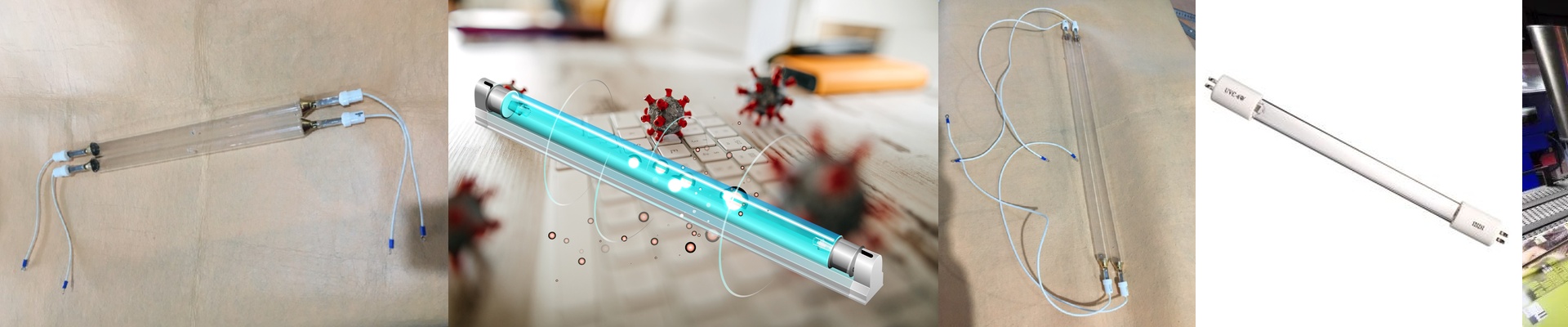
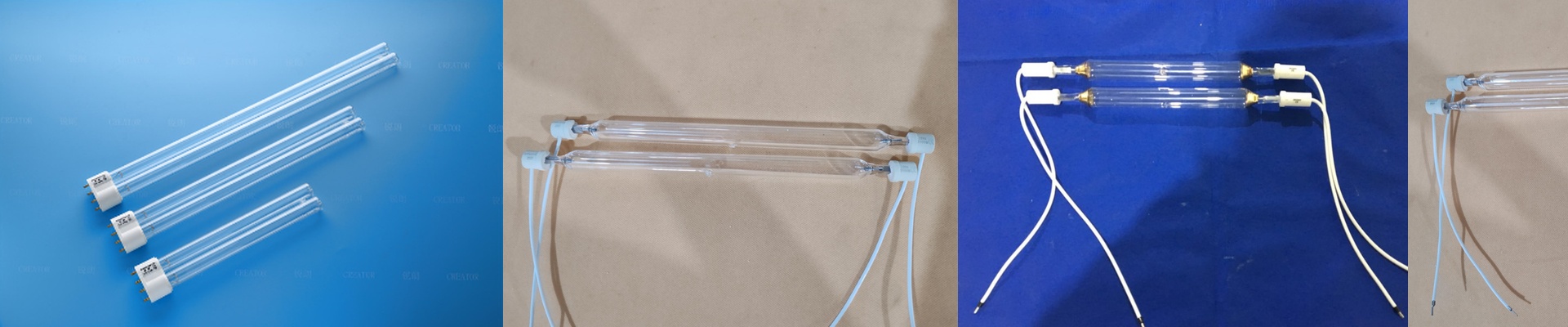
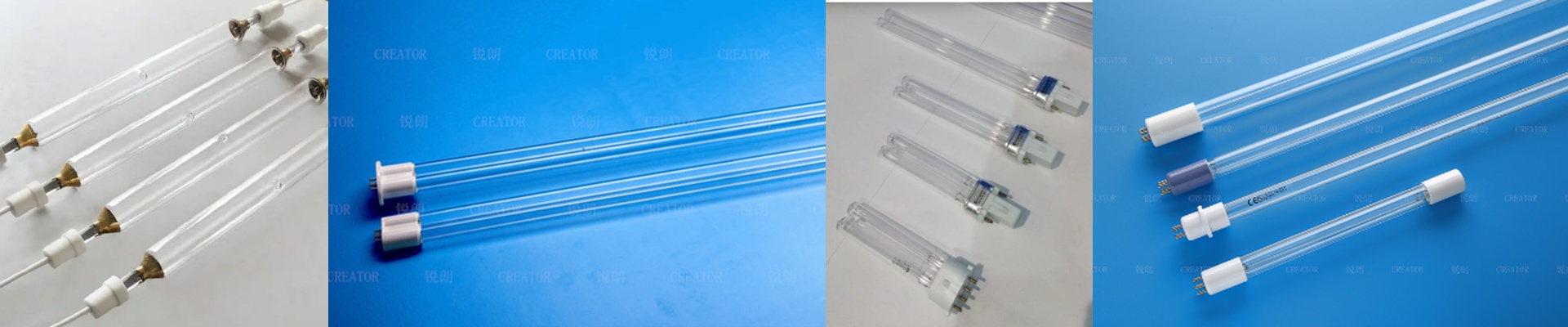
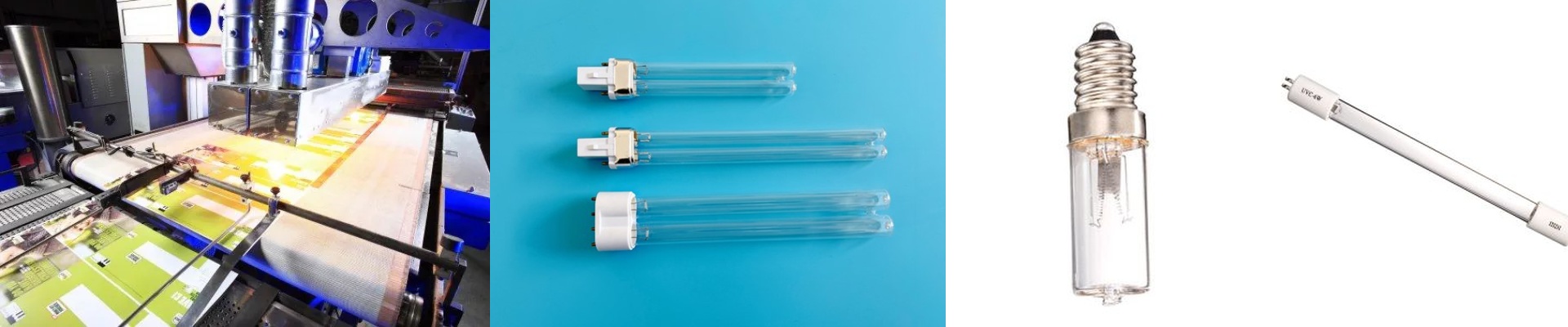
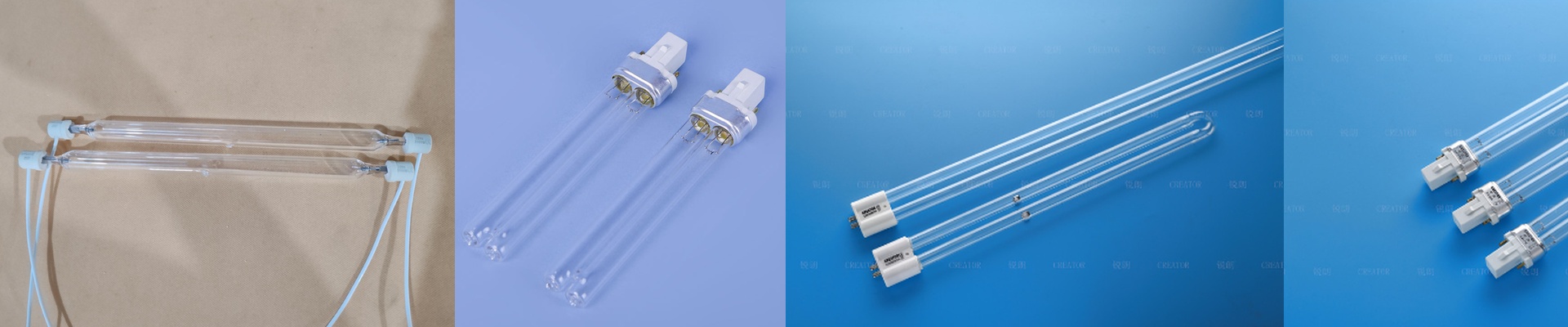
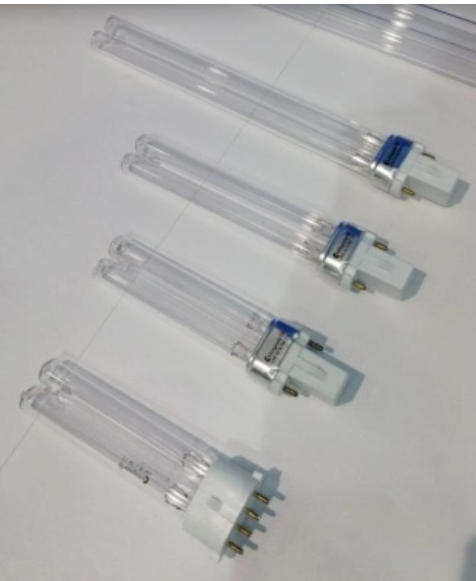
On the floor, the line between a job that ships and one that hits the scrap pile usually comes down to the lamp. Especially in textile printing—where you’re stacking pigmented inks, thick build, and tight register tolerances—UV curing isn’t just “drying.” It’s about hitting the photoinitiator absorption band with enough peak irradiance to drive cross-linking through the full ink film, while still keeping the substrate from coming off the line hot. The same is true in decorative work, like art-tile inkjet where a UV-cured topcoat has to deliver a glaze-like gloss and a hard, scuff-resistant surface. In both cases, the lamp has to put out consistent spectral output and stable energy density, shift after shift. When the lamp falls short, you get surface tack, interlayer adhesion failure, and ink that never reaches full hardness.
What actually matters, technically
A mercury UV lamp in industrial printing isn’t a single “type.” It’s a system. Arc length, fill pressure, envelope material, reflector geometry, and the electrical drive all shape what actually lands on the substrate. For textile work, most ink formulations are tuned to medium-pressure mercury vapor lamps, with dominant output around 365 nm and strong broadband emission across the UVA band. That spectral profile lines up with common photoinitiators in UV-curable inks, so you can get surface cure and through-cure in one pass. The performance drivers that matter on the line:
- **Spectral output and wavelength match.**365 nm gives you depth into the ink layer; 385–405 nm can contribute surface cure response, depending on the photoinitiator package. The lamp has to deliver stable output across the full arc length so the first and last color stations cure the same.
- **Peak irradiance and energy density.**Curing is photochemical. Peak irradiance (mW/cm²) at the substrate plane sets how fast the reaction starts; delivered energy density (mJ/cm²) decides whether it finishes. Undersizing the lamp leaves ink undercured, even when the conveyor speed “looks right” on paper.
- **Reflector efficiency and spectral selectivity.**Good dichroic reflectors push more usable UV to the substrate while cutting IR heat load. That matters on textiles because too much substrate heat drives moisture loss, dimensional drift, and print distortion.
- **Lamp life and output stability.**Output decay is inevitable as electrodes erode and the envelope ages. In practice, we target stable output for 1,000–1,500 hours in high-duty cycles, with predictable end-of-life behavior. Push a lamp past its rated hours and irradiance drops—often showing up first as a subtle tack that only appears after stacking and packaging.
- **Cooling and operating conditions.**Mercury UV lamps need stable airflow across the reflector and lamp body. Cooling isn’t comfort; it’s repeatability. Let the lamp run hot, output drifts, substrate temperature climbs, and suddenly you’re chasing quality by tweaking speed instead of chemistry.
Why this setup earns its keep
Textile presses—screen, flexo, or hybrid—run at line speeds that make curing the bottleneck if the lamp is mismatched. We match the lamp to the process by aligning arc length to print width, output to ink film thickness, and cooling to the duty cycle. With thicker ink deposits on textiles, a longer arc lamp spreads intensity more evenly across the width, reducing edge-to-center variability so the ink cures uniformly. On high-speed runs, we bump peak irradiance so the photoinitiator conversion happens quickly, even when dwell time is short. That same logic carries over to decorative tile printing, where the UV topcoat has to set up a glaze-like finish. Here, the lamp needs enough surface-level cure to lock in gloss and hardness, while still curing through the layer to prevent blocking and scratching. A lamp with the wrong spectral balance can skin the top and leave the interface undercured—looks fine until someone handles it, then adhesion and mar resistance fail. In both textile and tile-like decorative work, the payoff is operational:
- Faster cycle timewithout giving up cure depth, because the lamp delivers the required energy density at the required speed.
- Consistent gloss and hardness, because spectral output and irradiance stay stable across the lamp’s service life.
- Less scrap, because the cure profile repeats shift after shift.
- Energy use that tracks the reaction, because electrical input is matched to photochemical demand instead of running wide open to compensate for weak output.
The practical details you can’t skip
Matching a mercury UV lamp to your press isn’t just about wattage. It’s about integration. **Print process and lamp choice.**Each process stresses the lamp differently.
- Screen printingtypically lays down thicker films. That demands higher delivered energy density and a spectral profile that supports through-cure, not just surface skinning.
- Flexoruns thinner films at high speed. The priority shifts to high peak irradiance to kick off cure in very short dwell, with tight control on substrate heating.
- Offset and other roll-fed processesneed uniformity across the full print width and stable output over long runs. Arc length and reflector design have to match the print width and the lamp’s position relative to the substrate. **Installation and compatibility.**Lamp length, mounting brackets, electrical connections, and reflector geometry must fit the machine. A “close enough” lamp gives you hot spots, shadow zones, and uneven cure. If the lamp is longer than the reflector cavity, you lose output at the ends. If it’s shorter, you lose width coverage. **Substrate temperature control.**Textiles are heat-sensitive. Even with efficient reflectors, the lamp still generates IR. Use proper airflow and, where needed, IR filtering to keep substrate temperature inside the ink supplier’s recommended window. If you see curl, edge warp, or adhesion issues that show up after a few passes, substrate heat is a likely culprit. **One constraint worth respecting.**Mercury UV lamps are strong emitters in the short-wave UV range, and ozone can form if the lamp envelope and reflector design don’t manage the 185 nm line. In confined spaces, ensure ventilation and use ozone-free or low-ozone lamp configurations where the application requires it. If you’re spec’ing a mercury UV lamp for textile printing—or for decorative work that needs a glaze-like finish—start with the ink, the film build, and the press geometry. Then choose a lamp that delivers the right spectral output, the right peak irradiance, and the right energy density at the substrate. When those numbers line up, the lamp stops being “just a component” and becomes the control point that makes the process repeatable.