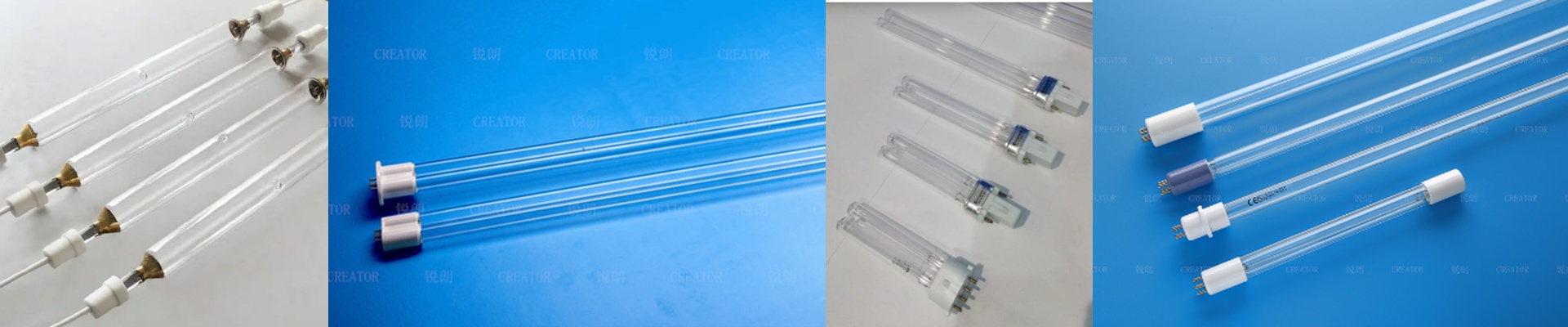
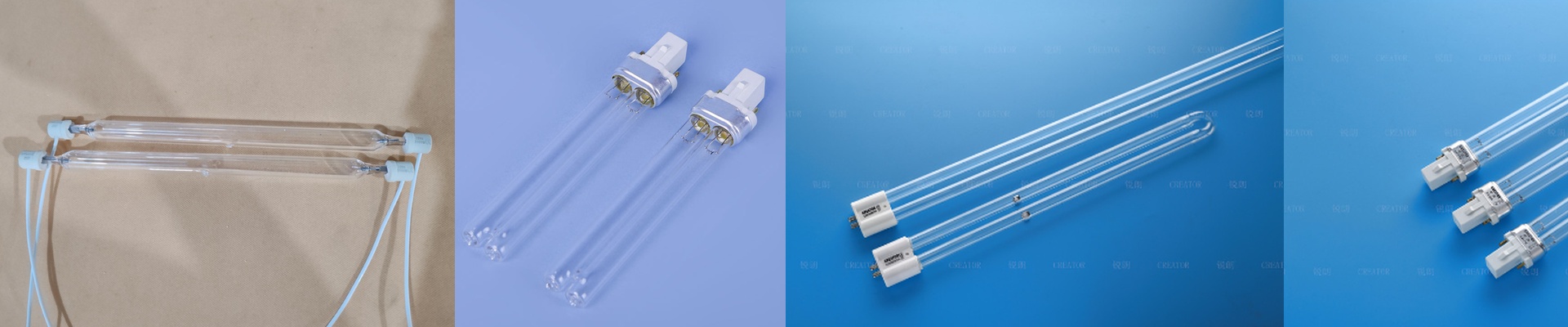
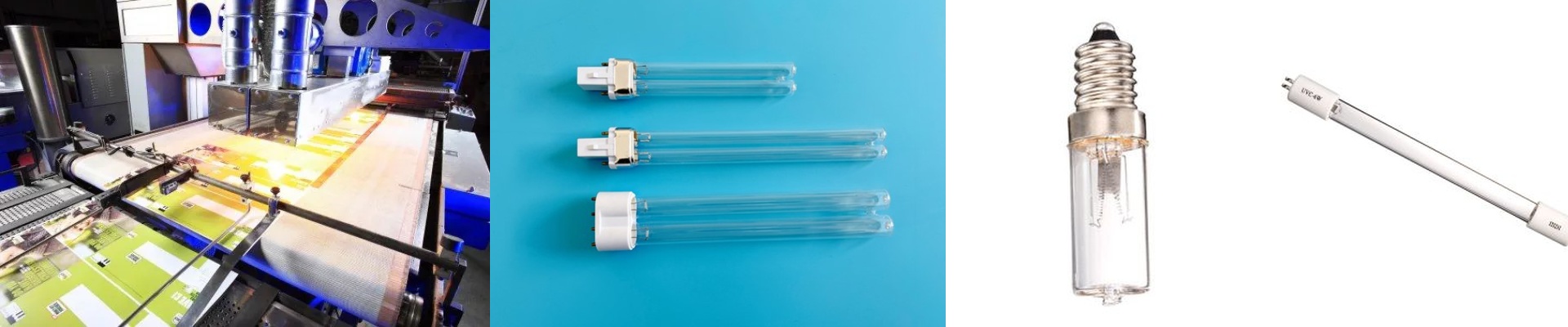
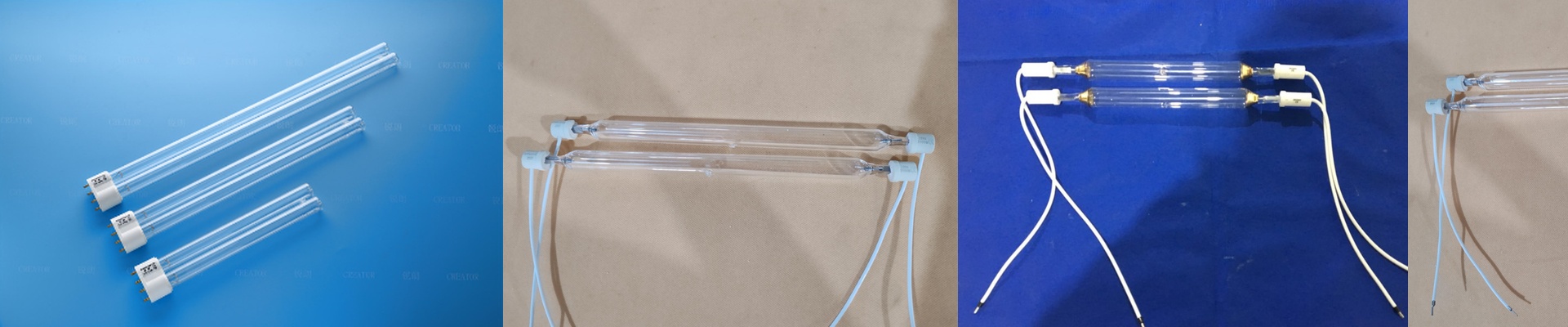
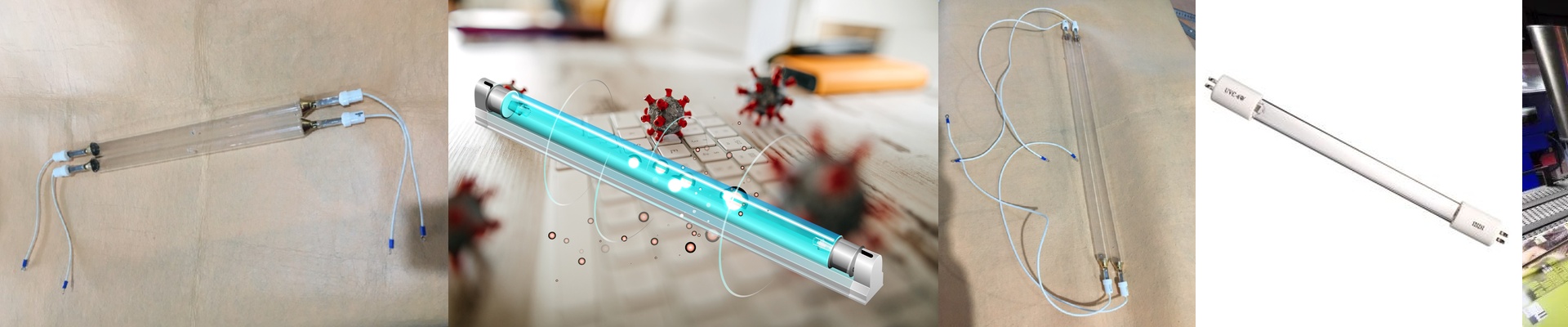
Walk the press floor when you’re running a mixed job—solvent-based adhesive ink next to water-based pigments—and the UV system either under-cures the adhesive or over-exposes the water-based color. You end up with tacky surfaces, color shift, and scrap. That’s mixed-ink printing in practice: one lamp profile doesn’t fit two chemistry families. The fix isn’t brute power. It’s controlling the spectrum. Match the lamp output to the photoinitiator absorption, and you can push line speed without gambling on quality.
What matters technically: UVA, UVB, UVC and spectral output
UV curing is a photochemical reaction. The lamp’s job is to deliver photons at the wavelengths the ink’s photoinitiators actually absorb. A conventional mercury-vapor lamp gives you three bands:
- UVC (200–280 nm, peak ~254 nm): Strong germicidal output, and strong ozone generation from air. In printing, UVC is rarely used for curing—most photoinitiators barely absorb here, and the ozone means you need serious extraction and safety controls.
- UVB (280–320 nm, peak ~300–313 nm): Penetrates deeper than UVA and can drive surface cure on thicker films, but it’s still a minority player in most graphic arts formulations.
- UVA (320–400 nm, peaks ~365 nm and ~395 nm): The workhorse for most UV inks and adhesives. 365 nm leans into deeper cure; 395 nm is often easier on heat-sensitive substrates and targets surface cure. A standard high-pressure mercury lamp emits across all three bands, plus visible blue. That broad output is exactly why a single lamp struggles with mixed inks—one ink wants the tail of the envelope, the other wants the peak. Spectral tuning changes that by shifting relative energy in each band. We do it by selecting lamp chemistry, applying dichroic coatings, and tuning the reflector stack so the output matches the photoinitiator absorption profile. Here are the metrics you should be able to measure on the floor:
- **Peak irradiance (W/cm²)**at the substrate plane: the instantaneous photon flux. Too low, and you can’t beat oxygen inhibition at the surface. Too high, and you risk surface skinning before the bottom layer cures.
- Energy density (mJ/cm²): irradiance × exposure time. This is the dose the ink sees. Every ink has a threshold dose for full cross-linking; mixed inks often need two different doses in the same pass.
- Spectral power distribution (SPD): the shape of the curve. A tuned system moves energy out of bands the ink doesn’t use and into bands it does, improving efficiency and trimming waste heat.
- Lamp output stability over life: mercury lamps decay. Expect a measurable drop in UV output over time; the goal is to keep that drop within tolerance so dose stays repeatable. In mixed-ink work, we bias toward UVA with solid output around 365–395 nm, suppress UVC to keep ozone and substrate damage in check, and add selective boosts where the adhesive ink’s photoinitiator peaks. That’s how you get a stable surface cure on the water-based layer while still driving full cross-linking through the adhesive layer.
Why it works here: spectral tuning for multi-ink compatibility
On a line printing adhesive and water-based inks together, the failure modes are familiar: surface tack from under-cured adhesive, color shift from over-exposing water-based pigments, and heat-related web distortion. The answer isn’t one “stronger” lamp. It’s a lamp whose spectrum you can align to each ink’s chemistry, then sequence exposure so each layer gets the right dose. We set up the curing station with spectral control that emphasizes UVA and lets you dial in the peak wavelengths your inks actually use. If the adhesive ink cures most efficiently at 365 nm, we shape the spectrum to deliver high irradiance at 365 nm without dumping excess short-wave energy that would cause premature surface skinning. If the water-based ink cures more gently and is heat-sensitive, we shift some output toward 395 nm and cut the short-wave contribution, lowering peak substrate temperature while keeping cure speed. On the floor, that translates to:
- A repeatable cure window: same job tomorrow, same lamp settings, same surface finish and adhesion.
- Higher line speeds: when the spectrum matches the photoinitiator, you hit the required dose faster, and the dwell constraint loosens up.
- Less scrap from mismatched cure profiles: mixed inks no longer force you to decide which layer pays the price. That’s the core of multi-ink compatibility: not one fixed spectrum, but an adjustable one that lets you match the lamp to the ink chemistry you’re running.
Different printing scenarios: offset, flexo, screen and lamp selection
Every press is different. Geometry, ink film thickness, and substrate sensitivity dictate what the lamp has to deliver.
- Offset printing: thin ink films, tight register, and heat-sensitive substrates. The lamp needs high peak irradiance in UVA for rapid surface cure, but it must keep substrate temperature under control. A tuned mercury lamp with strong 395 nm output and a reflector design that concentrates energy on the web path is a practical fit. The focus is stable output and repeatable dose so dot integrity and gloss stay consistent.
- Flexo printing: thinner films than screen, but anilox-controlled transfer and variable laydown. The lamp has to cure quickly to prevent set-off and maintain print density. A spectrally tuned mercury lamp often works best with a bias toward 365 nm for deeper penetration on pigmented layers. If you run mixed solvent/UV hybrid inks, you may need a profile that avoids too much short-wave energy, or you’ll get surface skinning before the bulk cures.
- Screen printing: thick ink deposits and heavy pigment loading. This demands deeper penetration and higher total energy to fully cross-link through the film. The lamp needs robust UVA with a strong 365 nm component to drive cure through the thickness, plus enough irradiance to overcome oxygen inhibition at the surface. With thick deposits, a tuned system that maintains irradiance across the full dwell width is essential—otherwise you get cured edges and an uncured center. Across all three, lamp selection isn’t just about power. It’s about spectral shape, reflector efficiency, and matching the lamp’s output to the press geometry. One size never fits all.
Things to know: installation, compatibility, and operating constraints
Spectral tuning works, but it comes with real-world constraints you have to plan for.
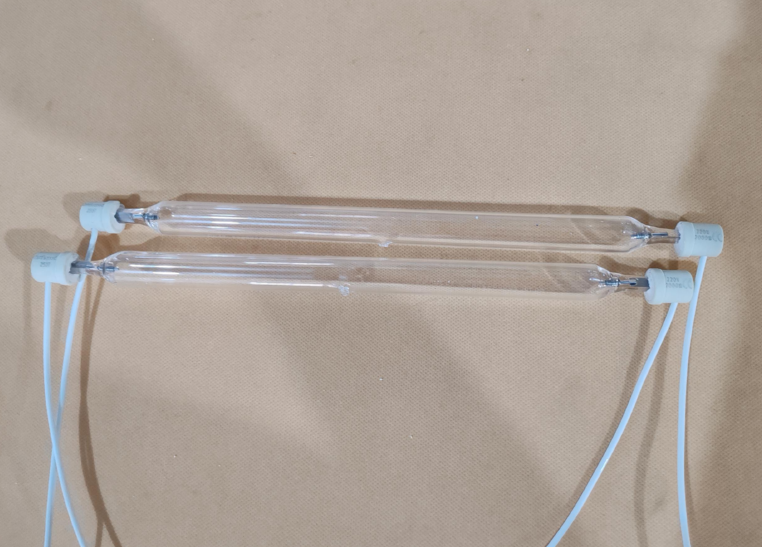
- Lamp and system compatibility: the lamp’s arc length, outer diameter, base type, and cooling envelope have to match the curing module. A lamp that physically fits can still underperform if the reflector and power supply were designed for a different spectral profile. We specify lamps to the curing chamber and press geometry—not as a universal swap-in.
- Ozone management: suppressing UVC reduces ozone, but any short-wave leakage can still generate it. Plan on adequate extraction and monitor ozone levels near the exhaust. Ozone-free designs exist, but they trade some output in the short-wave bands; you accept that trade when ozone control is non-negotiable.
- Heat and substrate sensitivity: even with a UVA bias, the lamp produces heat. Thin films, plastics, and heat-sensitive substrates need careful cooling and dwell design. If you run at high line speeds, the energy per unit time goes up; cooling capacity has to keep pace.
- Lamp aging and output drift: mercury lamps lose output over time, and the spectral shape can shift slightly as the arc tube ages. Replace lamps based on measured output decay, not just hours. Use a radiometer to track irradiance and dose at the substrate—that’s the only way to keep the process in control.
- Power supply and reflector condition: the ballast has to deliver stable power to hold irradiance steady. Reflectors degrade from heat cycling and handling. A nicked reflector or contaminated surface scatters energy and flattens peak irradiance across the web. Keep optics clean and inspected. If you’re running mixed inks and trying to push line speeds, the question isn’t whether spectral tuning helps. It’s whether you can afford not to use it. Align the spectrum to the photoinitiator, control the dose, and the press floor gets quieter, faster, and more predictable. When you’re ready to match your lamp spectrum to the ink on your line, we can measure the photoinitiator absorption, map your current irradiance profile, and build a curing profile that hits the right dose at the right wavelength. That’s how mixed-ink printing stops being a compromise and becomes a repeatable process.